Built around Dutch speech
Every feature runs on the same model: murmel-flash, an architecture of its own trained from scratch on Dutch speech, with English as a second language. On four open Dutch benchmarks the largest model makes the fewest errors of the seven models tested. The measurement is described in the Murmel v5 write-up.
How Murmel works, from recording to text
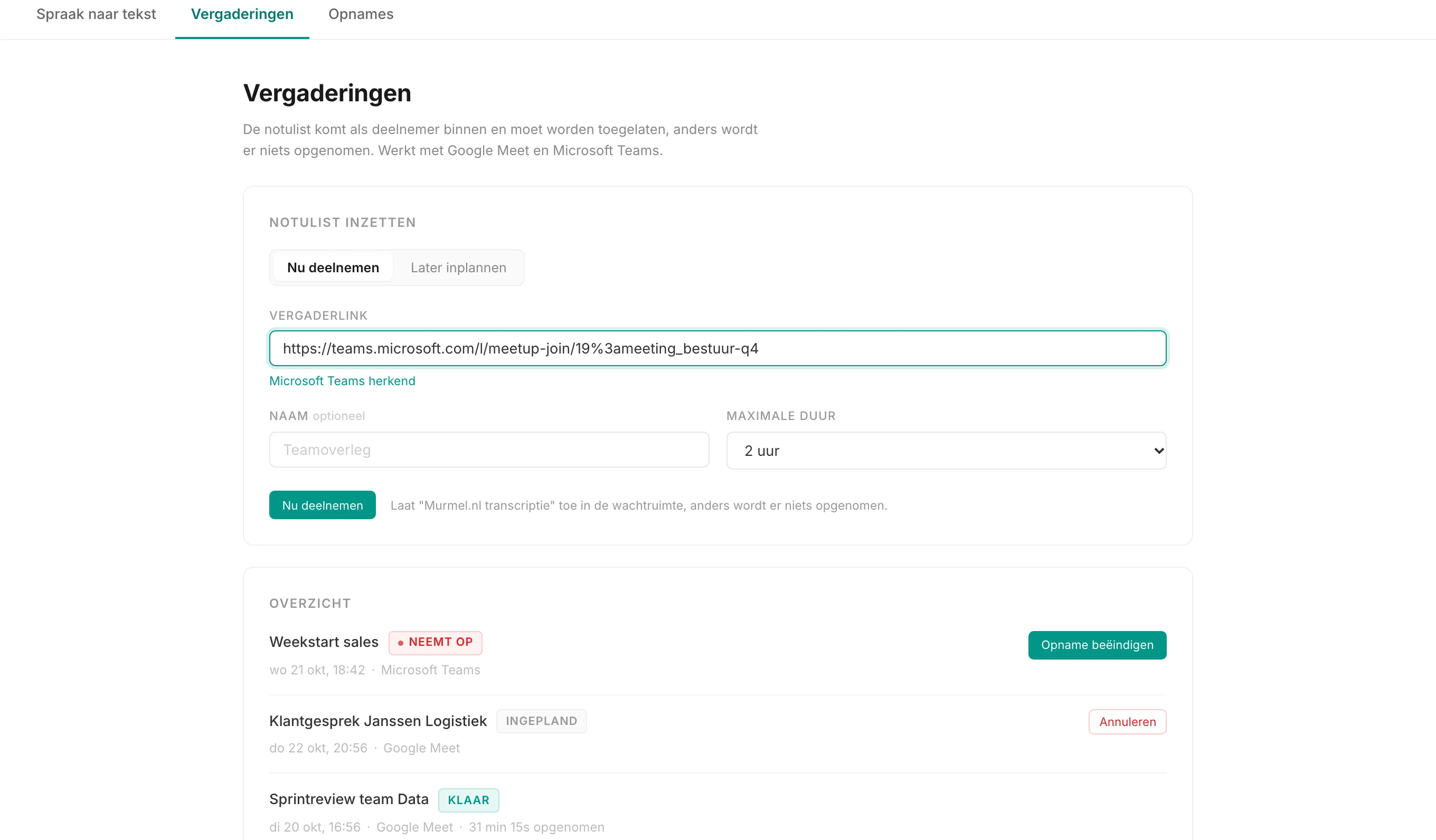
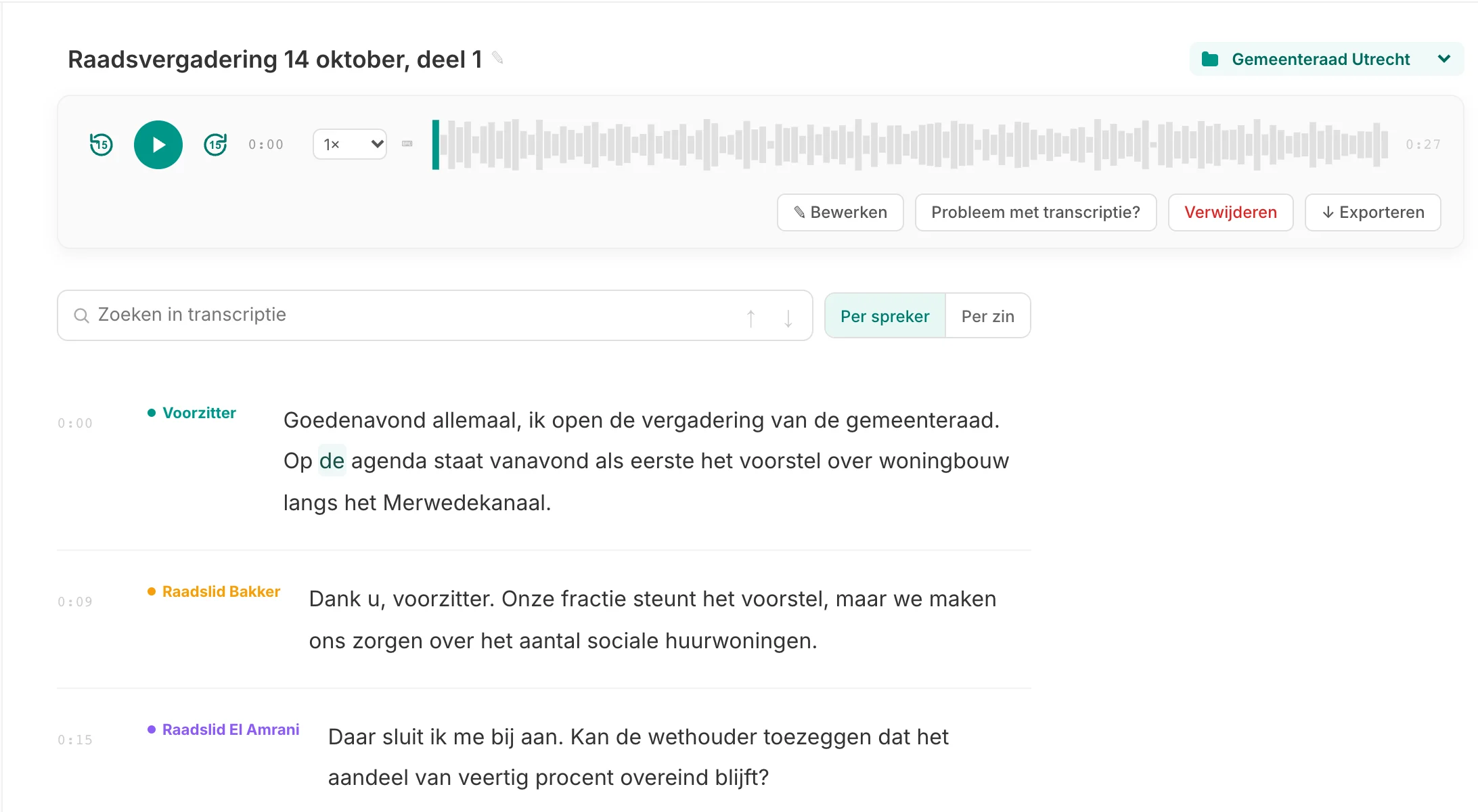
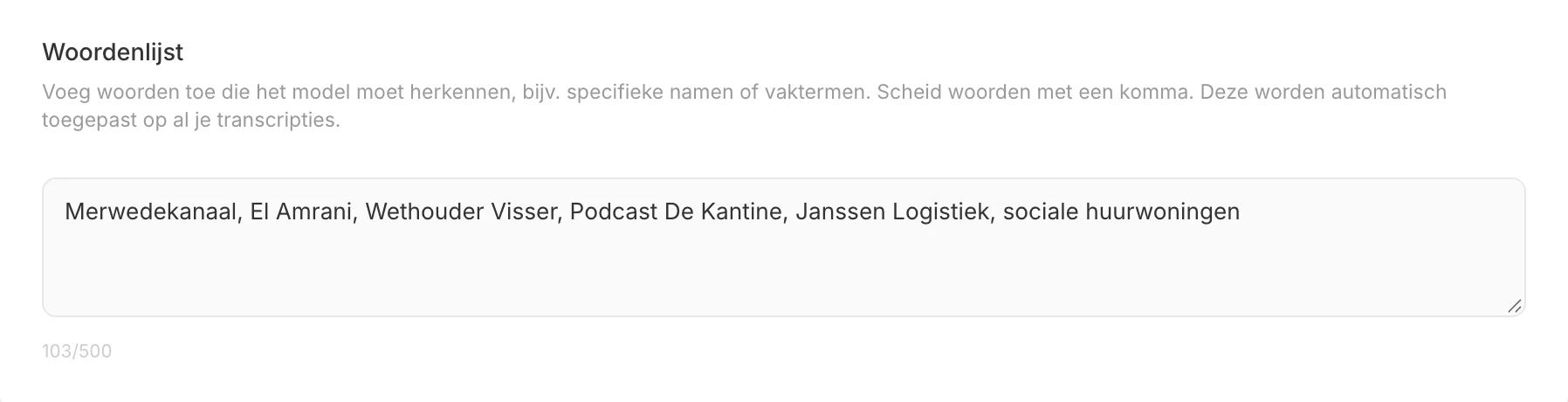
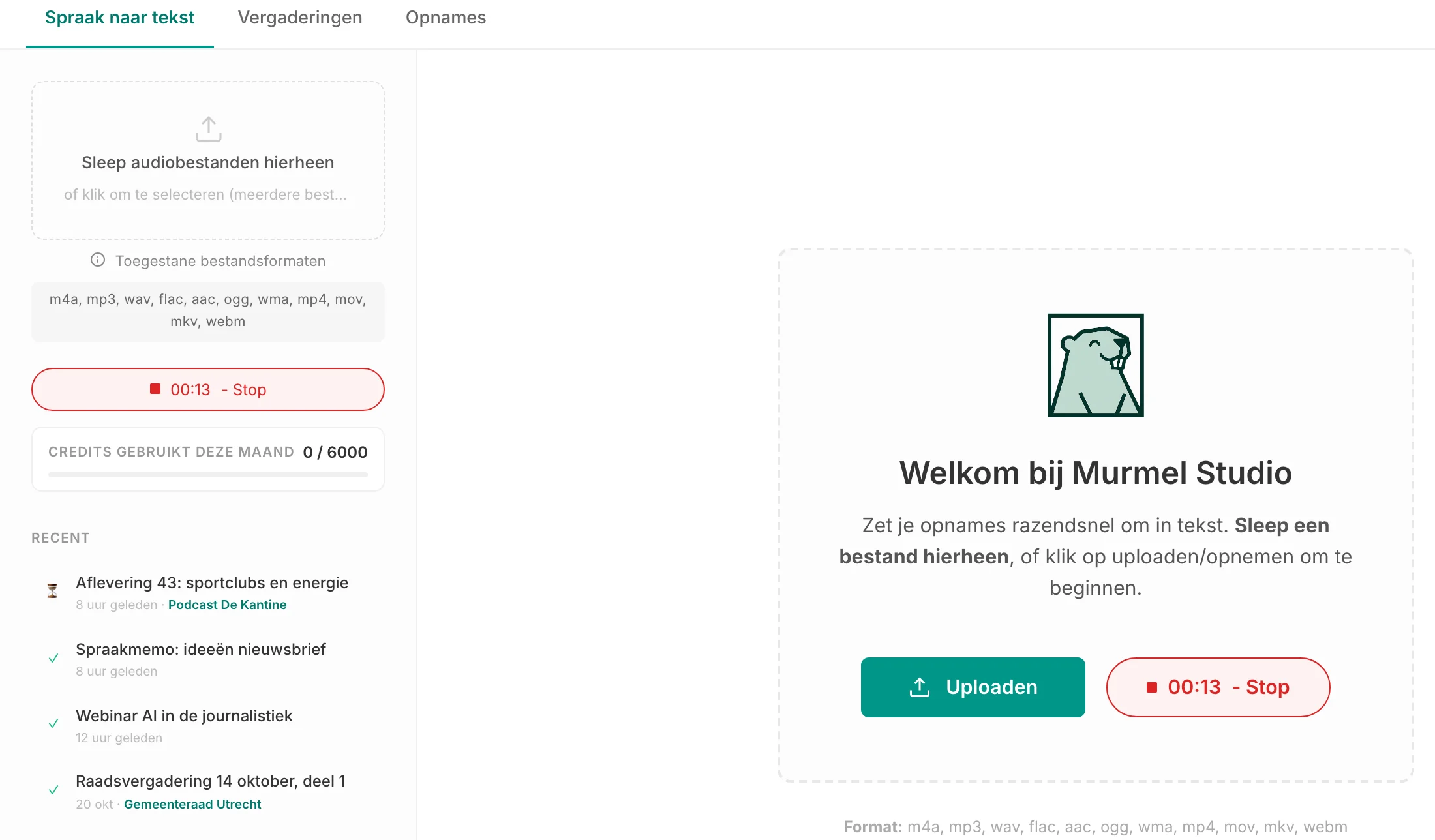
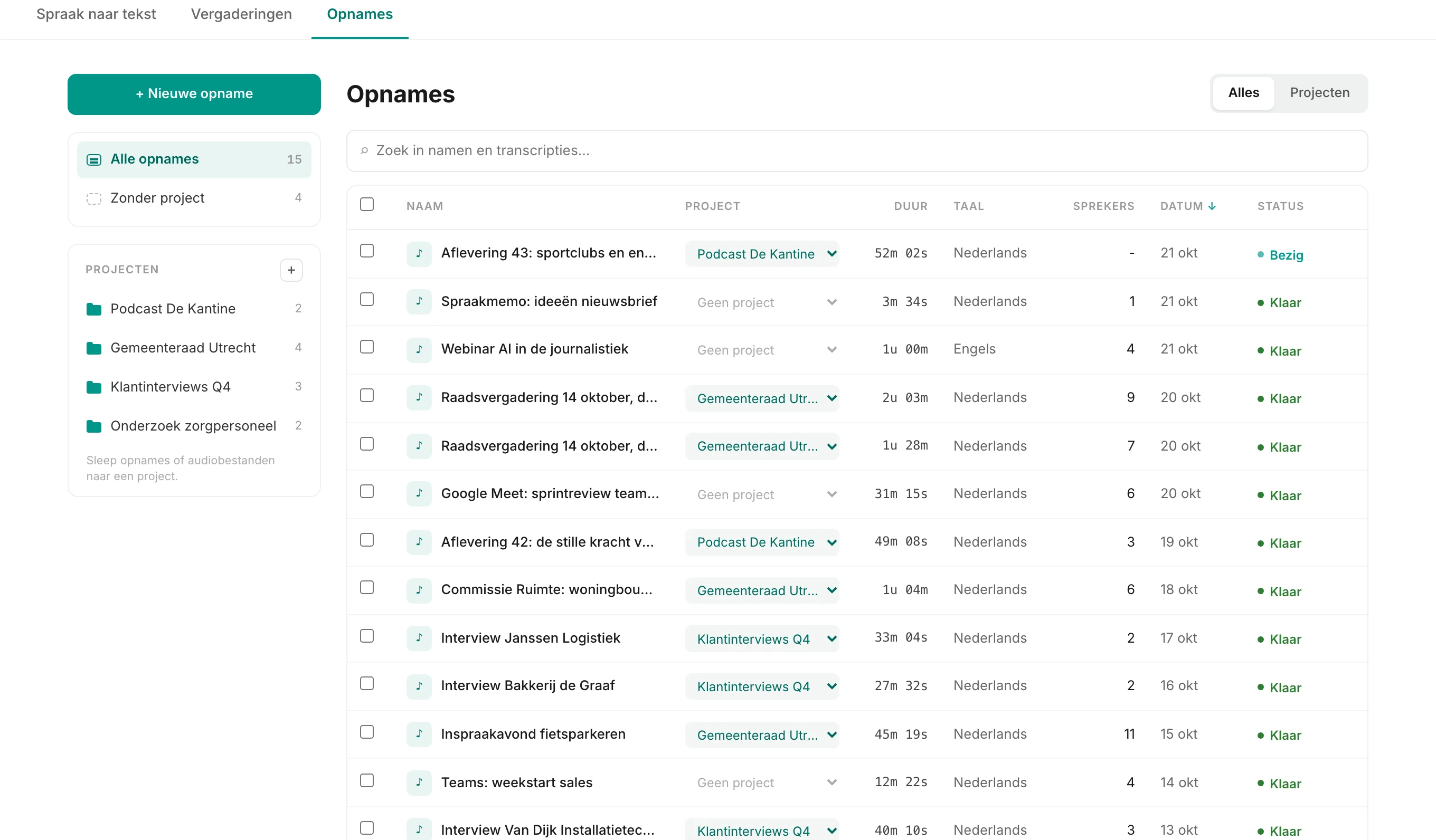
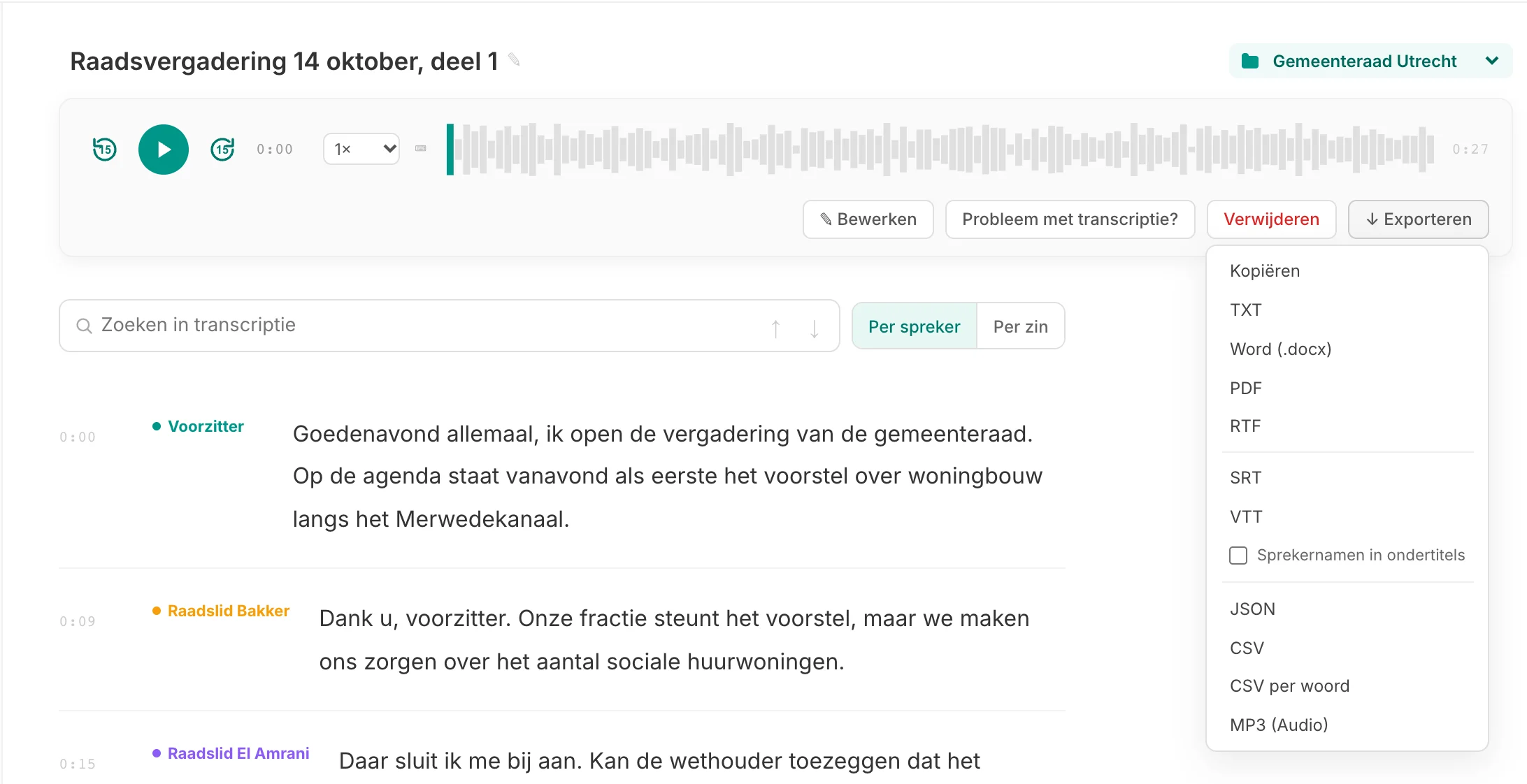
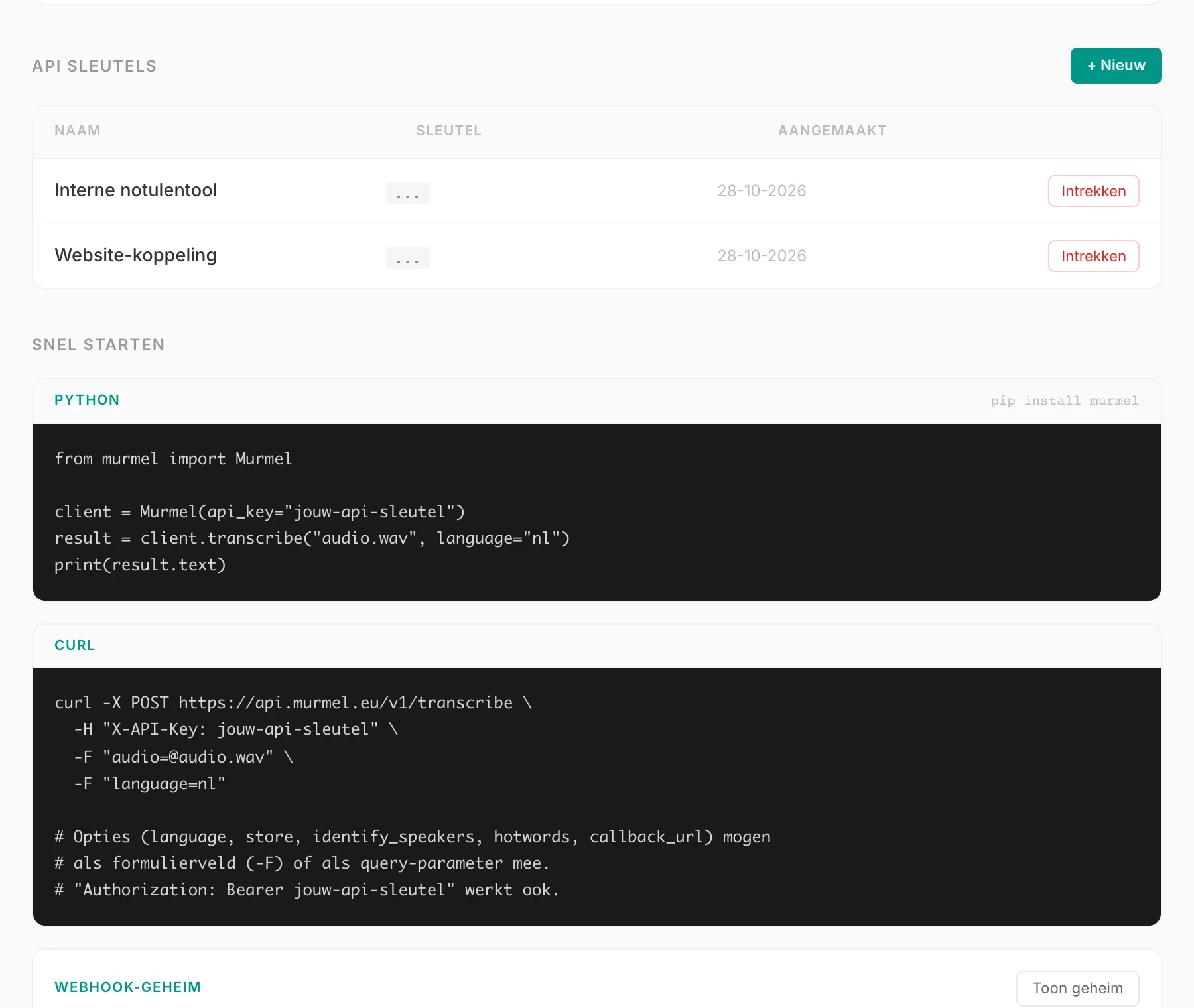
You start with audio: upload a file (mp3, m4a, wav, video and more, see audio to text), record in the browser or let the note taker join a Teams or Google Meet meeting. Within minutes the transcript is ready, with speaker recognition on every turn. Names and terms that keep coming back go into your custom vocabulary. In the editor you click a word to hear that fragment and fix what needs fixing. Then you export to Word, PDF, TXT, RTF, SRT, VTT, JSON or CSV, or keep everything organised in projects. Developers do the same through the API, on every plan.
Which features matter depends on your work. For each field it is worked out under sectors, from law firms to council meetings. How Murmel compares with other services is under compare.